St. Anthony College of Technology
Graduate School (SACT-GS)
AY 2025-2026, Volume 19, No. 01
SACT Graduate School Journal of Education and Development
Issue 01 (June 2026)
Copyright © 2025 SACT Graduate School
Journal for Educational Development (SJED)
All rights reserved.
DISCLAIMER: The views and opinions expressed in SAJED are those of the authors and contributors, and do not reflect the official position, views, or opinions of the SACT Educational Systems.
SAJED is an educational journal published by the St. Anthony College of Technology Graduate School (SACT-GS) of Mabalacat, Pampanga. The educational journal aims to deepen awareness on matters concerning education in the local and global contexts, from pedagogical goals, content, and practices, and tackles issues in educational development. The SAJED educational journal is a trimestral publication of the St. Anthony College of Technology Graduate School
St. Anthony College of Technology Graduate School
McArthur Highway, San Francisco, Mabalacat, Philippines
Telephone Number: (045) 331 7292
Email address: info.sactsystem@gmail.com sact.edu.ph
Facebook Page:
https://www.facebook.com/sact.edu.ph
EDITORIAL BOARD
Journal Consultant: Antonio S. Yap
Managing Editor: Emiliano T. Hudtohan, EdD
ADVISORY EDITORIAL BOARD
Antonio S. Yap
Atty. Josecarlo R. Anton Yap
Emiliano T. Hudtohan, EDD
Alice D.V. Carreon, EDD (Cand.)
CONTRIBUTORS
Emiliano T. Hudtohan
Dan Diane Zhang & Emiliano T. Hudtohan
Diana Rose Moncada-Gimena
Jovilyn de Lara Mendoza
Ma. Ruth Centeno Mallari
Romualdo Comia
Charmaine Clarissa Giuao
PEER REVIEWERS
Shiela Ramos-Atienza, PhD (University of the East, Philippines)
Francia R. Santos (De La Salle University, Philippines)
Jeswani Saket, PhD (Sharda University, India)
Dan Zhang, PhD (Jiyang College of Zhejiang A&F University, China)
Kamola Ergun Bayram, PhD (KTO Karatay University, Turkey)
Emiliano Hudtohan, EdD (De La Salle Araneta University, Philippines)
Letter from the Publisher
Antonio S. Yap

FAITH and VALUES
I will continue to do all my actions for the love of Thee (Lasallian Prayer)
In this issue of SACT Journal of Education and Development, I am happy to announce that the articles on Faith and Values are expressions of spiritual beliefs of St. Anthony College of Technology and St. Mutien College as Catholic schools. As an alumnus of De La Salle University, I am deeply immersed in the Lasallian spirituality which is anchored to the Faith, Zeal, and Communion of St. John Baptist de la Salle. Likewise, I am happy to note that the articles on social responsibility and culture resonate the values of Personal Social Responsibility of the Benita Catalino Yap Foundation (BCYF). Finally, I take note that the two articles of SACT master’s in education students articulate their significant values of their meaningful classroom engagement that reflect heir Insight on Philosophy of Education and Faith experience.
Together, we will continue to do all actions for the love of God, because Jesus truly lives in our heart.
Antonio S. Yap
Publisher, SACT Journal for Education & Development
President, SACT Educational System
Founder and Chairman, BCYF
Letter From the Managing Editor
SACT JOURNAL PEER REVIEWERS
Dr. Dan Zhang, A&F University, Shaoxing, Zhejiang, China

Dr. Francia R. Santos, De La Salle Univeristy, Philippines

Dr. Jeswani Saket, University of Agra, India
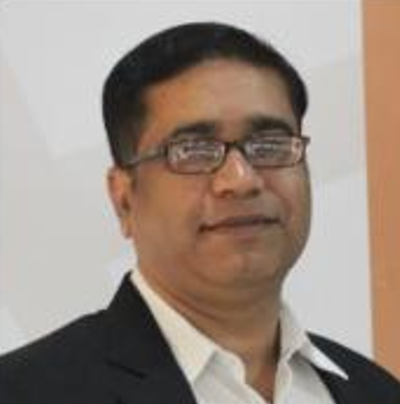
Dr. Kamola Ergun Bayram, KTO Karatay University, Konya, Turkey

Dr. Shyla Ramos-Atienza, University of the East, Philippines

Dr. Emiliano T. Hudtohan, St. Anthony College of Technology, Pampanga, Philippines
Abstracts from Peer Reviewers
This section features articles of SACT Peer Reviewers and external academic contributors whose papers add to the review of related literature in education and development studies. The email address of the authors are cited for readers who are interested in their articles.
Dan Zhang
Business School, Ji Yang College of Zhejiang A&F University, Zhejiang, China
Email: sjycinternational@zafu.edu.cn
Li Xue, Jingyi Sun
Xuchang Vocational Technical College, Xuchang, China
Pengju Xia
Xuchang Vocational Technical College, Xuchang, China
Jiangning Wu
Emilio Aguinaldo College, Manila, Philippines
Exploring the Synergistic Impact of Healthcare and Education Investments on Sustainable Economic Development: A Study Using Mixed-Method Analysis is an original article of above cited authors published on May 27, 2026 under Springer Nature Health Care Analysis (https://doi.org/10.1007/s10728-026-00573-2). It is a study on Investments in public health and education, examined independently in developing countries, which are both relevant to Sustainable Economic Development (SED). Within an integrated policy framework, this study aims to examine the complementary relationship between investments in health and education and their relationship with SED. A mixed-method approach was employed, consisting of 465 questionnaire responses from participants, including government officials, and 96 semi-structured interviews. Using Partial Least Squares Structural Equation Modeling (PLS-SEM), quantitative data were analyzed, and to contextualize the statistical results, qualitative findings were involved. Results indicate that healthcare infrastructure, coupled with investment in health and education, communicable disease reduction, mental health services, and coordinated public investment, are positively and statistically related to SED. Explained variance is (R² = 0.100), showing that there is a moderate but meaningful contribution in the broader institution context. Findings contribute to existing literature by incorporating cross-sectoral modeling with qualitative institutional-level findings. It provides a more holistic understanding of the relation between coordinated human capital investments and developmental outcomes. These insights recommend integrating policies between the health and education sectors to support inclusive and sustainable development in low- and middle-income countries. (https//rdcu.be/kYYT)
Dr.Kamola Bayram
kamola.bayram@karatay.edu.tr
KTO Karatay University, Turkey
Email: kamola.bayram@karatay.edu.tr
Salaudeen Salaudeen Olasubomi
International Islamic University Malaysia
Dr.Voltisa Thartori
International Islamic University Malaysia
The article of Dr. Bayram and Dr. Tharton, The Level of Financial Literacy Among Muslim Millennial Students appeared in the AQU Journal of Islamic Economics, Vol. 1 No. 2, pp. 102-115 (Dec. 2021). Millennials, also known as Generation Y, are a demographic cohort who were born between early 1980’s and late 1990’s and are reportedly to be active users of FinTech. At the same time, recent research documents the problems Millenials are prone to inadequate financial knowledge, an unsatisfactory current financial situation, and misuse of retirement accounts. The last segment is particularly very important since life expectancy today is rising, while pension and social welfare systems are being strained. In this paper we examine the level of financial literacy among millennial students who at the same time active users of financial technology. The data was collected via questionnaire distribution to International Islamic University Malaysia (IIUM) students in the campus. From all collected responses 217 which matches the research criteria such as students who belong to Millennial generation were selected for analysis. To measure financial literacy level, we use the “Big Three” method designed by Lusardi and Mitchell (2011). In our study where respondents are university students, findings suggest that 47% out of all 217 respondents has a satisfactory level of financial literacy. The level of financial literacy is higher among post-graduate students and engineering students. Mobile payment users comprise 64% of respondents and only 24% among them is financially literate. It is also noteworthy that 93% of respondents do not have a retirement account. These findings are very important since the study is conducted in a university environment where 100% of the respondents are involved in higher education. It is crucial to teach finance subjects in all faculties and there is a dire need to establish an institution which will regularly conduct a nationwide survey to access the level of financial literacy and financial behaviour of youth to avoid the financial collapse of Generation Y.
Dr. Saket Jeswani
Associate Professor, OP Jindal University,
Punjipathra, Raigarh
Email: saket.jeswani@opju.ac.in
Mr. Durgesh Satpathy
Research Scholar OP Jindal University
Punjpathra, Raigarh
Email: durgesh.satpathy@gmail.com
Dr. Jeswani Saket and Mr. Durgesh Satpathy’s article on How Employees Raise Voice? A Model of Employee Voice Regulation was published in SCMS Journal of Indian Management January-March 2022 edition. The study proposes a model for employee voice regulation, analyzing the psychological and organizational factors that influence whether employees speak up about issues or remain silent Drawing on regulatory focus theory, the purpose of the study is (a) to present a conceptual model integrating Employee Value Proposition (EVP), Psychological Contract and Employee Voice Behavior (b) to present propositions justifying the relationship between the variables, and (c) put forward a research agenda. A systematic integrative literature review of 57 studies was conducted. Based on the review, research gaps were identified in the theoretical perspectives, methodological aspects, and it was found that there is a paucity of research integrating EVP and other variables in a regulatory focus perspective. A bibliometric analysis using VOSviewer also supported the findings from the literature review. The link between Psychological Contract, Regulatory Focus, and Employee Voice Behaviour can be seen in earlier studies. The present study made an attempt to link Employee Value Proposition with these variables. The study also concluded with a future scope suggesting the need of strengthening the current theoretical foundation with empirical testing.
Dr. Emiliano T. Hudtohan
St. Anthony College of Technology, Pampanga, Philippines
De La Salle Araneta University, Malabon, Philippines
Email: hudtohanemiliano1944@gmail.com
Website: emilianohudtohan.com
https://emilianohudtohan.com
This lecture of Dr. Emiliano T. Hudtohan titled, Preparing Human Resource for Global Competition was submitted to the International Journal of Education and Human Development on December 18, 2023. The paper is intended for the business graduate school students who will eventually find themselves as human resources in a corporate work environment in the 21st century. The New Year 2024 ushers the end of a Great Period of Change (2012-2023) in a volatile, uncertain, complex, and ambiguous (VUCA) world and the Age of Upheaval in business, where our human condition, according to Br. Armin Luistro, FSC, is Finite, Fragile and Free. For the new graduate, being antifragile means resilience in facing daunting challenges and being an agent who strives for total development to meet challenges with personal diligence to achieve avowed short and long term goals for corporate survival. More importantly, it is critical for the new graduate to realize that s/he is an empowered individual who is 99.999 percent spirit and .001 percent body, described as such by quantum physicists: Bruce Lipton, Sean Carroll, Joe Dispenza, James Ray and Neale Donald Walsch. The graduate is therefore encouraged
to create a Personal Vision and Mission, using Alan Seale’s meditation formula and craft her/his true purpose and strategic life direction anchored to the supernatural, metaphysical, and physical/natural realities of human experience. In corporate practice, the graduate may encounter two leadership style: a manager-centered leader described in Managerial Grid or employee-centered leader in Situational Leadership.
Managing the Impact of the ASEAN Economic Community and the Mining Industry: A Quantum Perspective by Dr. Emiliano T. Hudtohan was published in The Journal of Business Research and .Development, San Beda College Graduate School of Business, Volume II, No.2 Academic Year 2015-2016, ISSN 2408-3186. The Asean Economic Community (AEC) Blueprint discusses the four pillars of the Asian Economic Community with 17 core elements and 176 priority actions implemented by member nations in December 2015. The objective of this paper is present a quantum perspective on this new organizational phenomenon in Asia; it discusses an alternative economic platform to hasten relationship among AEC members and specifically, it poses a challenge to the mining industry to superstruct for sustainability.The framework of this paper is quantum management in the light of the new economy and the new environmental ecology. Thus, the mindset of the mining management is invited to move from a 17th century Cartesian-Newtonian paradigm to a 21st century quantum worldview. Thus, the need to consider the AEC as: 1. A quantum organization in terms of its economic, political and leadership structure; 2. An economic innovator in promoting the comparative advantage of David Ricardo in contrast to the current competitive advantage practice in business; 3. A pioneer in developing the common wealth of Martin Brown in veering away from the current practice of rabid pursuit of commercial wealth; and 4. A model in the mining industry where Asean members superstruct locally and regionally by consolidating their resources, and ultimately participate in a new global economy with sustainable ecology.
Book Review: The Context of Cultural Intelligence by: Dr. Emiliano T. Hudtohan was published in De La Salle University, College of Business and Economics Review, Vol. 20 No.1 July 2010. The book, Leading with Cultural Intelligence authored by David Livermore, PhD was published by AMACOM, Division of American Management Association in 2010. Livermore’s contribution to global leadership is his pioneering work on cultural intelligence (CQ), a new addition to a growing number of multiple formulations of human intelligences and quotients. By addressing culture as a key factor of leadership in a global context, he now provides a neutral perspective on culture for corporate leaders. This perspective is aligned with the growing trend of understanding other cultures and civilizations with empathy. In terms of corporate governance, he complements existing Western studies and researches on multinational, transnational, and global organizations by corporate and culture gurus like Schein, Hofstede, Hall, Trompenaars and Stoltz. Leading with Cultural Intelligence may yet facilitate the implementation of global hypernorms proposed in integrative social contract theory and
facilitate compliance to global standards of codes of conduct. Cultural intelligence practitioners may find Hersey’s situational leadership model and Hall’s values development relevant in monitoring personal progress. Finally, Livermore’s cultural intelligence opens a wide opportunity for academic scholars and researchers to explore leadership in a cross-cultural setting.
ABSTRACTS FROM THE ACADEMIC COMMUNITY
In this issue of SACT Journal of Education and Development, the articles are divided into the following categories:
- Faith and Values: Pope Benedict XVI and the Second Enlightenment; Creativity and Innovation of Pope Francis; Religious Faith and Values; and Homo Deus, Power, Faith and Artificial Intelligence: A Quantum Theological Perspective.
- Academic Education: Transcendental Living; Insights on Philosophy of Education; Dict The Effectiveness of Internal Auditing at De La Salle Araneta University: An Assessment, Competitive Advantage and Comparative Advantage in Business: Educational Implications; The Agency Theory and Antifragility: Formation of Filipino Teachers; Insights on Philosophy of Education, and Three Inspiritaions for Creativity and Innovation.
- Social Responsibility and Culture: Transforming Global Society; Social Responsibility in Modern China and the Traditional Chinese Philosophers; Ecological Civilization: Sustainable Development Model of China; Sustainable Business Programs in Enhancing Customer Retention in the Food Ingredient Import-Trading Company; Serving the Motherland: Everyone’s Responsibility; and Makinaugalingon Advocacy of Rosendo Mejica: Exploring the Bisayan Value of Empowerment.
1. FAITH AND VALUES
Dr. Emiliano T. Hudtohan, AB, BSE, MA, EDD
Professor
De La Salle Araneta University, Malabon
St. Anthony College of Technology
hudtohanemiliano1944@gmail.com
Dr. Emiliano T. Hudtohan’s article on Pope Benedict XVI and the Second Enlightenment is a comparative study on the theological worldview of the two Pontiffs. The paper delivered at the San Beda University Research Summit on: April 21, 2023. Pope Benedict XVI’s legacy are: 1. true reform, 2. liturgical renewal, 3. importance of the Bible for theology, 4. synthesis of faith and reason, and 5. Christocentrism. His pronouncements on these are primarily based on his Scholastic orientation, primarily influenced by St. Thomas Aquinas, St. Bonaventure and St. Augustine. Pope Francis, true to the Jesuit tradition, openly said he abhors Scholasticism. Thus, his theology was in fact leaning towards contemporary worldview. His philosophical and theological ideas were considered aligned to James Ebner’s Human Race Church, Karl Rahner’s Anonymous Christian, O’Murchu’s Quantum Theology, Gordon Lynch’s New Spirituality, Neale Donald Walsch’s Essential Path, and Joe Dispenza’s Becoming Supernatural. This narrative presents the dogma-driven leadership of Pope Benedict XVI as thesis and the pastoral management of Pope Francis as antithesis. The prognosis of the tension between divergent theology of Pope Benedict XVI and Pope Francis asks this question: Can their differences on Church issues be resolved through Western conflict management, Marxian thesis-antithesis-synthesis paradigm, Chinese Yin Yang harmony, and Creative Fidelity? If not,the Catholic Church is headed towards a social rapture, and eventually a schism. However, divine intervention cannot be excluded as a reality.
Creativity and Innovation of Pope Francis by Dr. Emiliano T. Hudtohan, EDD presents the legacy of Pope Francis as Pontiff of the Catholic Church. In more ways than one, he towed the line of Pope John John XXIII’s reform through Vatican Council II (1962-1965). Upon his death, he left a legacy of what he considered: 1.True reforms in the Church. 2. Liturgical renewal, 3. Role of the Bible for Theology. 4. Synthesis of Faith and Reason, and 5. Christocentrism. The reign of Pope Francis as Pontiff addressed the following issues: 1. The Church of Mercy and 2. Inclusivity of the Catholic Church, 3. Fidelity to the Gospel and 4. Synod on Synodality with the key participation of the laity. Pope Francis’ management style was pastoral and therefore, people oriented, rather than dogma-driven as exercised by Pope Benedict XVI. He ushered the era of the Great Period of Change in a vulnerable, uncertain, complex and ambiguous (VUCA) world of the 21st century. The modernist Catholics considered him an avante garde Pontiff aligned to Pope John XXIII aggiornamento, while the traditionalists considered him as a divisive Pope that pushed the Church to the brink of schism.
Charmaine Clarissa I. Guiao
San Pablo 2nd Elementary School, Lubao Pampanga
St. Anthony College of Technology, Pampanga
Email: charmaineclarissaguiao@gmail.com>
Charmaine Clarissa I. Guiao’s paper is final requirement for the course in Religious Faith and Values in the Master’s of Education Program of St. Anthony College of Technology, Pampanga. She is Teacher III of San Pablo 2nd Elementary School, Lubao, Pampanga. To minimize the use of AI, Professor Dr. Hudtohan asked his class to reflect on Transforming Global Society, a paper he delivered at a webinar of the International Association of Management and Human Resource Development (IAMHRD), Kendari, Indonesia and Transcendental Living, a professorial lecture at the De La Salle Araneta University (DLSAU), Malabon, Philippines. Guiao’s reflection is based on her experience as a wife, mother, teacher and a Servant of God. She discussed: Her transformation from ME to We, global empathy as a teacher, friend, daughter, and community member, transformational leadership and transcendental living in terms of spiritual, physical and emotional well-being.
Dr. Emiliano T. Hudtohan, AB, BSE, MA, EDD
De La Salle Araneta University, Malabon
St. Anthony College of Technology
hudtohanemiliano1944@gmail.com
The article of Dr. Emiliano T. Hudtohan on Homo Deus, Power, Faith and Artificial Intelligence: A Quantum Theological Perspective was delivered at the Benita Catalino Yap Foundation (BCYF), St. Anthony College of Technology ( SACT) and St. Mutien College ( STM) Artificial Intelligence Education Conference March 26, 2024 via Zoom. It discusses the role of personal belief (faith) when humans interact with AI in the Age of Digital Technology. Humans as Homo Sapiens, according to Harari (2016) have evolved to be a Homo Deus, a man god whose power is achieved by interacting with artificial intelligence. Tegmark (2017) claims in his book, Life 3.0, that conscious beings give meaning to our Universe. He concludes that as we prepare to be humbled by ever smarter machines, we take comfort mainly in being Homo Sentient, not Homo Sapiens any longer. Depending on the designer and creator, AI can be a boon or bane to humanity. It is assumed that AI has godly power. However, In quantum physics, God is conceived as Pure Energy. Divine Pure Energy is translated by AI quantum gurus as cosmic energy aligned to Harari’s (2016) Homo Deus. The quantum self of humans is seen as 99.999 percent spirit/energy and only .001 percent body/matter (Dispenza,2019). The relationship of humans with God is based on faith with a belief that God’s divinity promotes the sacralization of nature and the cosmos as the site of divine presence; it likewise includes the sacralization of humanity. (O’Murchu, 2004).
2. ACADEMIC EDUCATION
Dr. Emiliano T. Hudtohan, AB, BSE, MA, EDD
De La Salle Araneta University, Malabon
St. Anthony College of Technology
hudtohanemiliano1944@gmail.com
Transcendental Living of Dr. Emiliano T. Hudtohan, EDD was delivered as a Professorial Lecture of the De La Salle Araneta University Research Center on March 13, 2026. The paper earmarks the 80th Foundation Anniversary of De La Salle Araneta University (DLSAU: 1946-2026) as his starting point for long-term institutional challenges with a new tagline: Touching the Spirit for Transcendental Living. It involves discovering one’s True Self in a Lasallian quantum organization that is emerging in 16 Lasallian institutions. It points to Transcendental Leadership, Personal Social Responsibility (PSR 3.0) and Personal Spiritual Responsibility (PSR 5.0) as platforms to meet future personal and organizational challenges. For quantum organizational development he makes reference to: Joe Dispenza’s Being Supernatural, Deepak Chopra’s Quantum Paradigm, Donald Walsch’s Spiritual Beings Manifesting Physically, Bruce Lipton’s Everything is Energy and Emprima’s 5th Dimension. The paper challenges De La Salle Araneta University to promote a new tagline: Touching the Spirit for Transcendental living (DLSAU 2026-2106).
Romualdo Comia
DepEd School, Bataan, Philippines
Sr. Anthony College of Technology, Pampanga
Email: romualdo.comia001@deped.gov.ph
Insights on Philosophy of Education by Romualdo Comia is a final paper for the course on Philosophy of Education in the Master’s Education Program of St. Anthony College of Technology, Pampanga. The key areas that are discussed in his narrative are: 1. Socrates as classical educator, 2. Montessori and Dewey as modern educators, and 3. Dr. Hudtohan’s 21st century educational perspective. From Socrates:”I know that I know nothing,” he avers that this classical concept redefines the relationship between teacher and learner. It is the essential starting point for genuine academic inquiry and discovery. The pedagogical maieutics, the Socratic metaphor of the teacher acting as an intellectual midwife to give birth to knowledge and elenchus, demonstrates that systematic questioning is the ultimate tool for cognitive development. He cites Montessori and Dewey as source of a powerful blueprint for him as a school principal to promote progressive, experiential education through “learning by doing.” He accepts the importance of human motivation, consciousness, and progressive education. Likewise, he recognizes Abraham Maslow’s classic hierarchy of needs into the expanded realms of self-transcendence, cognitive expansion, and Brian Hall’s phases of human consciousness illustrate that learning is an inherently holistic endeavor. Comia’s reflective journey fosters an environment where leadership is intellectually grounded, teachers are empowered for active inquiry, and students are becoming critical thinkers
Jovilyn De Lara Mendoza, MBA, (PhD. Cand.)
De La Salle Araneta University, Malabon, Philippines
Email: jovilyn.delara@dlsau.edu
Ethics in Relation to Work Practices in the Department of Information and Communications
Technology (DICT): An IMRaD Paper by Jovilyn Mendoza examines the ethical foundations of the Department of Information and Communications Technology (DICT) of the Philippines. As a government agency in the Age of AI, it is responsible for cybersecurity. It plays a significant role in ensuring ethical public service delivery in the digital age. The study employed a qualitative descriptive to identify ethical principles reflected in the agency’s mission, vision, service commitments, and operational procedures. Findings revealed that DICT promotes transparency, accountability, inclusivity, privacy protection, professionalism, and equitable digital access across its services and organizational systems. Ethical theories such as Rawlsian Justice, Utilitarianism, Deontology, Virtue Ethics, and the Ethics of Care were used to interpret the agency’s responsibilities and governance practices. John Rawls’ Theory of Justice particularly explains DICT’s commitment to reduce digital inequality and promote fair access to ICT services. The study concludes that ethical governance is essential in strengthening public trust, protecting digital systems, and supporting the country’s vision of an inclusive and secure digital society.
Ma. Ruth Centeno Mallari, MBA, (PhD. Cand.)
De La Salle Araneta University, Malabon, Philippines
Email: ruth.centeno@dlsau.edu.ph
The Effectiveness of Internal Auditing at De La Salle Araneta University: An Assessment by Ma. Ruth Centeno Mallari, MBA, CHRA, (PhD.Cand.) is in response to the university’s internal audit charter. It covered School Years 2003–2004, 2004–2005, and 2005–2006. It examines the extent and level of internal audit performance, differences in respondents’ perceptions, and the problems encountered with corresponding solutions. The research design include the use of questionnaires and documentary analysis from 120 respondents composed of administrators, faculty, and staff. The findings revealed that the extent of internal audit performance was rated agree with an overall mean of 4.23 and the level of performance was rated effective with an overall mean of 4.11. Audit functions obtained the highest rating, whereas coordinating and communicating information received the lowest. Although the problems encountered were not considered serious, the study found a continuing need to strengthen communication, risk-based planning, professional development, and continuous audit improvement. The study concludes that internal auditing at the university was generally effective and remains essential in promoting sound governance, internal control, and institutional accountability.
Dr. Dan Zhang, BA, MBA, DBA
Vice Dean, Business School, Ji Yang College of Zhejiang A&F University, Shaoxing, Zhejiang, China
Email: 76182991@qq.com
Dr. Emiliano T. Hudtohan, AB, BSE, MA, EDD
De La Salle Araneta University, Malabon
St. Anthony College of Technology
hudtohanemiliano1944@gmail.com
Competitive Advantage and Comparative Advantage in Business: Educational Implications.This paper was delivered at the business forum of De La Salle Araneta University, Malabon, Philippines in 2019. Dr. Zhang and Dr. Hudtohan address business management education concerns in connection with the 4 Cs: critical thinking, collaboration, communication and creativity in MBA program. Critical thinking allows individuals to reflect on one’s experience and determine what course of action should be taken. This paper proposes an effective management framework based on Yin and Yang for sustainable development of organizations by reviewing their mainstream and multistream management, and their competitive and comparative advantages in business. The critical thinking of the paper addresses the importance of multistream approach to management based on comparative advantage that endorses the successful organizations that are committed to values that inspire others, work for the best interests of the global community, and demonstrate a commitment to constant improvement. It aims to provide the educational implications of profitability, wellbeing and Yin Yang principle. It discusses the educational implications of multistream management and comparative advantage in the master’s in business administration program. The framework makes use of Yin and Yang Principle to demonstrate the relationship between competitive and comparative advantages in business. The primary method of this study is documentary research narrative of Marshall and Rossman based on review of related literature in management. The researchers believe that the exercise in discussing Competitive Advantage and Comparative Advantage requires critical thinking and creativity in injecting mainstream and multistream management in higher education program of MBA.
Dr. Emiliano T. Hudtohan, AB, BSE, MA, EDD
De La Salle Araneta Univeristy, Malabon, Philippines
St. Anthony College of Technology, Pampanga, Philippines
Email: hudtohanemiliano1944@gmail.com
The Agency Theory and Antifragility: Formation of Filipino Teachers authored by Dr. Emiliano T. Hudtohan EDD was published in the International Journal in Management Education and Human Development in 2023, Volume 03, Issue 02 (Pages: 902-921). It was delivered at the TechFactors webinar on The Filipino Teacher’s Formation in the 21st Century on January 29, July 22, August 5, and August 19, 2022. As professor of Philosophy of Education at the St. Anthony College of Technology, he shares this paper for his students and readers who are educators. Part 1 is teacher’s formation in the 21st century, focusing on Teacher Agency which covers Performance-Evaluative that deals with cultural, structural, and material dimensions of being an agent, Iterative Performance that deals with one’s personal and professional histories and Projective Performance that deals with short-term and long-term existential activities. Part 2 situates the Teacher Agent in a global context of education in the 21st century, where the Teacher agent has to master various teaching methods: 1. pedagogy (child learning), 2. andragogy (adult learning) and 3. heutagogy (self-efficacious learning). Likewise, the Teacher Agent has to master 21st century skills in: 1. Creativity and innovation, 2. Digital technology, 3. Global citizenship, 4. Inter and Intrapersonal relations. Part 3 discusses three areas in education and learning that can be considered as antifragile scenarios. Antifragility is a behavioral state beyond being fragile and robust as a professional. It is a platform that promotes a positive behavior in face of adversity. The three areas in education presented as antifragile are: 1. Human relationship in terms of friendship is fragile; kinship is robust but attraction is antifragile. 2. Regulations and rules are fragile; principles are robust but virtue is antifragile. 3. Learning: the classroom is fragile; real life is robust but real life plus library is antifragile.
Three Inspirations for Creativity and Innovation was Dr. Emiliano T. Hudtohan’s Opening Remark at the International Conference on Education Management Agri-Business and Entrepreneurship (ICEMABE), Kendari, Indonesia sponsored by the International Association of Management and Human Resource Development (IAMHRD) June 17, 2023. The first inspiration comes from cosmology. It considers the Universe as the laboratory of creativity and innovation. This is where Mother Galactica nurtures every human to be also caring and nurturing. The second inspiration is from the Greek mythology where Gaia is considered as Mother Earth who deals with Chaos who sows problems and disorder through Eros who is a creative force that provides humans with creative solutions to problems. The third inspiration is from Quantum Physics, where everything is considered as energy. It points to God as the source of Energy, which is resident in humans. Quantum physicists declare humans as 99.999 percent energy connected to an energy and ultimately to the Divine Source: God. Theologically, humans are made to the image and likeness of God. When He said there be light, there was light. And so, humans are likewise creative with energy sourced from God.
3. SOCIAL RESPONSIBILITY AND CULTURE
Dr. Emiliano T. Hudtohan, AB, BSE, MA, EDD
De La Salle Araneta Univeristy, Malabon, Philippines
St. Anthony College of Technology, Pampanga, Philippines
Email: hudtohanemiliano1944@gmail.com
Transforming Global Society of Dr. Emiliano T. Hudtohan EDD is a keynote speech delivered at the International Association of Management and Human Resource Development (IAMHRD) conference in Bali, Indonesia on April 16, 2026. It is a narrative on Transforming Global Society: Integrating Economics, Accounting, Entrepreneurship, Management and Education in the Digital Era. Part 1 is Transforming Global Society, exploring our human relationships through governance, galactic and personal connections. This connectivity requires global empathy, cultural intelligence (CQ), spiritual intelligence (SQ) and digital intelligence (DQ). Harari presents the Homo Sapiens interacting with artificial intelligence (AI) as Homo Deus. Tegmark asserts that when interacting with AI Homo Sapiens becomes Homo Sentiens with heightened consciousness. Part 2 is Economics, The Queen of Social Sciences, considered as a holy grail that solves socio-economic issues at the national and global arena. Part 3 is Cosmology: The Queen of the New Science, where theology is anchored to quantum physics. Humanity’s true self is seen as 99.999 percent energy/spirit and only .001 percent body/matter. The New Science of quantum physics is w[thin the domain of Maslow’s Self-Transcendence and Collective Transcendence, bridging Dispenza’s human Unlimited Possibilities in the 5th Dimension. Thus, humans are becoming supernatural capable of transcendental living.
Dr. Dan Zhang, BA, MBA, DBA
Vice Dean
Business School, Ji Yang College of Zhejiang A&F University, Shaoxing, Zhejiang, China
Email: 76182991@qq.com
Dr. Emiliano T. Hudtohan, AB, BSE, MA, EDD
Professor
De La Salle Araneta University, Malabon
St. Anthony College of Technology
hudtohanemiliano1944@gmail.com
Social Responsibility in Modern China and the Traditional Chinese Philosophers authored by Dr. Dan Diane Zhang, DBA and Dr. Emiliano T. Hudtohan, EDD is a discussion on social science in China at a forum as a General Lecture on Social Science Halo Oleo University, Kendari, Sulawesi, Indonesia on June 24, 2019. It is understanding the science of social responsibility and political science in the context of socialist governance of the People’s Republic of China. Corporate social responsibility after China embraced market capitalism created a major environmental pollution, the Tiananmen Square student protest and the China-Philippines relations are presented as social issues. These three events are discussed in the light of the traditional philosophers (Confucius on governance and Lao Tzu on care of nature) perspectives. China adopted the concept of social responsibility and faithful to its Confucian tradition, a Mandated CSR which goes hand in hand with Pres. Xi Jing Ping’s Ecological civilization where the People’s Republic of China is at the top of the pyramid direction the economy, culture, society and ecology for sustainable development. Likewise, Mandated CSR and Ecological Civilization are deeply anchored to Taoist philosophical focus on the environment. The governance of the People’s Republic of China manifests a very strong centralized and bureaucratic exercise of power, which manifests a Confucian hierarchical exercise of authority. The paper discusses CSR and governance in the light of traditional Confucian and Taoist perspective.
Dr. Dan Zhang, BA, MBA, DBA
Business School, Ji Yang College of Zhejiang A&F University, Shaoxing, Zhejiang, China
Email: 76182991@qq.com
Dr. Emiliano T. Hudtohan, AB, BSE, MA, EDD
De La Salle Araneta University, Malabon
St. Anthony College of Technology
hudtohanemiliano1944@gmail.com
Ecological Civilization.Ecological Civilization: Sustainable Development Model of China authored by Dr. Dan Diane Zhang, DBA and Dr. Emiliano T. Hudtohan, EDD makes use of the Ecological Civilization paradigm of Xi Jinping, President of the People’s Republish of China, to demonstrate a creative and innovative perspective on sustainable development. It is a creative product of the Chinese People’s Republic of China (PRC) because for the first time a comprehensive approach to sustainability is put forward with the government as key significant player in managing business, society, and culture for the protection and care of the environment. It is innovative because it is an enhancement of the 1987 Brundtland Report on the Triple Bottom-line of People, Profit and Planet harmonious relationship. It is innovative because it makes use of traditional Chinese teachings and the Yin Yang principles in promoting harmony between humans and nature. Ecological Civilization is an environmental paradigm that has been articulated by the ancient philosopher Lao Tzu. Its pyramid governance study reflects the traditional Confucian hierarchical model in managing the Chinese economy, culture, society and ecology. It is innovative because it is a socialist dialectic idealism, a variant of Marxist dialectic materialism. The Asian Development Bank (ADB) published in 2019 Ecological Civilization of the People’s Republic of China: Values, Actions, and Future Needs. ADB East Asia Working Paper Series. No.21 authored by Arthur Hanson.
Diana Rose Moncada-Gimena, MBA, (PhD. Cand.)
De La Salle Araneta Universtiy, Malabon, Philippines
Email: diana.gimena@dlsau.edu.ph
Sustainable Business Programs in Enhancing Customer Retention in the Food Ingredient Import-Trading Company by Diana Rose Moncada-Gimena, MBA, (PhD Cand.). The food ingredient import-trading industry, maintaining long-term customer relationships is critical for sustaining business operations, ensuring supply chain continuity, and supporting stable employment within the sector. This study investigates the influence of sustainable business programs on customer retention and examines how operational practices contribute to responsible trade, economic productivity, and sustainable growth. The findings of the reveal that product quality and delivery reliability significantly influence customer retention, while effective account management and accurate documentation strengthen trust and transparency in business transactions. This suggest that sustainability-oriented operational practices enhance supply chain efficiency reinforce stable business partnerships and support responsible employment practices within the industry. By strengthening customer relationships and promoting efficient trade operations, sustainable business programs contribute to improved productivity and inclusive economic growth aligned in fostering resilient supply chains and sustainable business development in the food ingredient import-trading sector.
Dr. Emiliano T. Hudtohan, AB, BSE, MA, EDD
De La Salle Araneta University, Malabon, Philippines
St. Anthony College of Technology, Pampanga, Philippines
Email: hudtohanemiliano1944@gmail.com
Dr. Emiliano T. Hudtohan, EDD presents his articles on Makinaugalingon Advocacy of Rosendo Mejica: Exploring the Value of Empowerment. It narrates the the cultural battle cry of Rosendo M. Mejica who promoted Makinaugalingon (self-reliance), a Hiligaynon vernacular word to oppose the use of Spanish and American English language and worldview. Part 1 begins with the origin of the town Parian which eventually carried the name Molo in Iloilo. The Muslim pirates from Mindanao raided settlement along the shoreline of Panay during the Pre-Spanish colonial era. Upon seeing the vintas of the Muslim raiders, the Chinese residents of Parian (who could not pronounce “r”) shouted “Molo, Molo” to warn the community. Thus, Parian became known as Molo. Rosendo M. Mejica was a bona fide resident of Molo. Part 2 is Propagating the National Interest of Rosendo. His nationalist paradigm as a Mason was anti-Spanish and anti-Catholic. His children were not allowed to speak Spanish and he forbade them to go to confession. He initiated to change streets with Spanish name into Filipino nationalists, like Graciano Lopez Jaena and Marcelo H. del Pilar. Part 3 is Resisting Spanish Influence. He was aligned with the revolutionary ideals of Jose Rizal and Graciano Lopez Jaena. He translated Rizal’s Noli and Fili and Lopez-Jaena’s Fray Botod and La Hija del Fraile in Hiligaynon and published them through the Makinaugalingon Printing Press. As founder of Mga Baybayanon, he established the Baluarte Elementary School for Ilonggos to become titulados. Part 4 discusses Makinaugalingon in the context of other Hiligaynon supportive values of: being titulado, masaligan, matarong and may buot; achieving principalia status; and practicing dungan and dungog,
Serving the Motherland: Everyone’s Responsibility Dr. Emiliano T. Hudtohan EDD was a keynote speech at the 25th Anniversary of Benita Catalino Yap Foundation (BCYF) CSR Youth Awards at the Tower Club, PhilamLife, Ayala Avenue, Makati on November 26, 2018. His focus was on personal social responsibility (PSR) originated and developed by Antonio S. Yap, founder of the Benita and Catalino Yap Foundation (BCYF) in 1993. On the 25th anniversary of BCYF, the CSR Youth Award is a reminder that the parents of Chair-Founder Antonio S. Yap, Dr. Benita and Sir Catalino Yap are exemplars of personal social responsibility (PSR), citizenship, and sustainability. PSR predates Archie Carroll’s philanthropic CSR in 1999; Hess, Rogovsky, and Dunfee’s Corporate Social Initiatives in 2002; Porter and Kramer’s Corporate Shared Values in 2011; and China’s Mandated CSR in 2013. PSR through BCYF’s vision and mission demonstrates the Power of One as exemplified by the BCYF CSR Youth Awardees in helping beneficiaries create material and social wellbeing. PSR is anchored on Filipino value of kagandahang loob which animates a person to perform a Filipino bayanihan social responsibility for the Motherland. PSR demonstrates Jeffrey Sach’s Power of One that creates a Butterfly Effect, locally and globally.
Dr. Emiliano T. Hudtohan
Managing Editor, SJED
FAITH and VALUES
Pope Emeritus Benedict XVI and the Second Enlightenment
Dr. Emiliano T. Hudtohan, BA, BSE, MA, EDD
De La Salle Araneta University, Malabon City, Philippines
St. Anthony College of Technology, Pampanga, Philippines
Paper delivered at the San Beda Research Summit: April 21, 2023
ABSTRACT This narrative is about Pope Emeritus Benedict XVI’s legacy as a staunch defender of the faith against perceived threats that rock the very foundation of the Magisterium of the Church. He exercised his authority ex cathedra and published many scholarly theological writings and pronouncements as Pontiff to parry all attempts that endangered the faith and morals of the faithful. In his lifetime, he defended the orthodoxy of the Church against relativism and some Vatican II reforms. His legacy is in the realm of 1. true reform, 2. liturgical renewal, 3. importance of the Bible for theology, 4. synthesis of faith and reason, and 5. Christocentrism. When Quantum Physics in the 21st century overran the Age of Enlightenment, Benedict XVI’s synthesis of faith and reason was challenged by a modernist view on God as Energy, resulting to a synthesis of the natural/physical, metaphysical, and super-natural dimensions of reality. His resistance to relativism is being overran by the Theory of Relativity, which states that all reality is subjective when viewed by an observer. His philosophical and theological ideas were not considered at all in James Ebner’s Human Race Church, Karl Rahner’s Anonymous Christian, O’Murchu’s Quantum Theology, Gordon Lynch’s New Spirituality, Neale Donald Walsch’s Essential Path, and Joe Dispenza’s Becoming Supernatural. His death on December 31, 2022 marked the end of the vestiges of the Age of Enlightenment. It ushers the Age of the Second Enlightenment at a time when the Period of Great Change (1987-2023) is coming to a close. After faithfully serving God, the Holy Catholic Church and humanity, he declared with his last breath, “Lord, I love you.” This narrative presents the dogma-driven leadership of Pope Benedict XVI as thesis and the pastoral management of Pope Francis as antithesis. Thereafter, the prognosis asks: Can the conflict between the traditionalists and the liberals on Church issues be resolved through Western conflict management, Marxian thesis-antithesis-synthesis paradigm, Chinese Yin Yang principle of harmony, and Creative Fidelity? If and when the doctrinal differences between the traditionalists and liberals continue to escalate, the Catholic Church will certainly experience social rapture, and eventually a schism. However, divine intervention cannot be excluded as a reality. .
Keywords: magisterium, ex cathedra, pontiff, liturgical reform, Christocentrism, quantum physics, Second Enlightenment, creative fidelity. thesis, antithesis, prognosis, and schism
INTRODUCTIONOn April 19, 2005, Joseph Alois Ratzinger was elected pope at the age of seventy-eight, as successor of John Paul II. Born in 1927 in Marktl am Ian, Bavaria, his academic stint at the University of Bonn allowed him to meet theological giants, like Hans Kung, Edward Schillebeeckx and Karl Rahner. During the Second Vatican Council (1962-65) he served as a theological consultant and was later appointed by Pope Paul II as prefect of the Congregation for the Doctrine of the Faith. A follower of Augustine, Bonaventure and Thomas Aquinas, he was challenged starting 1968 with the arrival of postmodern society and relativism, where all worldviews had equal validity. For him, the central event in modern history was the Enlightenment which occurred in a Christian environment, where there was a dynamic interplay of faith and reason . (Watson, 2011).
Pope Emeritus Benedict XVI had a distinguished career as a theologian and as prefect of the Congregation for the Doctrine of the Faith. His papacy faced several theological, social, and pastoral challenges, including a decline in vocations and church attendance, divisive debates concerning the direction of the church in the 1990s and issues related to Vatican II aggiornamento reforms initiated by Pope John XXIII in 1962 (Frasetto, 2022). His life-time journey amidst these overwhelming circumstances in the service for God and Christianity was punctuated by his last words on December 31, 2022, “Lord, I love you.”
REVIEW OF RELATED LITERATUREThe two prominent authors in the Age of Enlightenment are Rene Descartes (1646) who wrote The Passions of the Soul and Meditations on the First Philosophy and Isaac Newton (1687) wrote wrote Mathematical Principles of Natural Philosophy. Joseph Ratzinger has volumes of books and articles anchored to the tradition of the Age of Enlightenment; some of these are: Introduction to Christianity (1968), Dogma and Revelation (1973), In the Beginning: A Catholic Understanding of the Story of Creation (1999), New Covenant (1995), and Behold the Pierced One (1986).
The 21st century is described as a volatile, uncertain, complex, and ambiguous (VUCA) ) world by Bennet and Lemoine (2014) and it is experiencing the Great Period of Change from 1987 to 2023 (Page, 2008), the Age of Upheaval (Hult, 2016), and Fractal Time (Braden, 2010). There are also books that are not aligned to his writings, expressing ideas based on quantum theology and new spirituality. O’Murchu’s (2014) Quantum Theology, James Ebner (1976) Mystery as God Present and Karl Rahner’s (1972 ) Anonymous Christian are not in consonance with Benedict’s theological pronouncements. Further, philosophical and spiritual writings: Capra’s (1975) The Tao of Physics, Zukav’s (1979) The Dancing Wu Li Master’s, Wolf’s (1989) Taking the Quantum Leap, Wheatley’s (2006) Leadership and the New Science, Kilmann’s Quantum Organizations, Porter-O’Grady, Timothy, and Kathy Malloch’s (2003) Quantum Leadership: A Textbook of New Leadership, Deepak Chopra’s (2006) Freedom and Grace, James M. Mapes’ (2003) Quantum Leap Thinking, Joe Dispenza’s (2017) Becoming Supernatural, Neale Donald Walsch’s (2019) The Essential Path, and Lynch’s (2007) New Spirituality support the ideas of contemporary theologians pronouncements on God and spirituality.
STATEMENT OF THE PROBLEMThe passing away of Pope Benedict XVI showcased his theological legacy as leader of the Roman Catholic Church. This study seeks to find out:
- What is the thesis of Pope Benedict XVI on:
1.1.True Reform in the Church
1.2. Liturgical Renewal
1.3. The Bible and Theology
1.4. Faith and Reason and
1.5. Christocentrism. - What is the antithesis of the contemporary theologians and spiritual authors vis-à-vis his five theological legacies?
- What is the prognosis on the apparent conflict between traditional and liberal worldviews regarding Pope Benedict XVI’s teachings?
OBJECTIVES
This narrative aims to: 1. Present the key lessons learned from Pope Benedict XVI’s theological teachings and governance as pontiff; 2. Review the five enduring lessons of Pope Benedict XVI from a contemporary and quantum theological perspectives. 3. Situate the death Pope Benedict XVI as a symbolic the end of an era where his dogmatic theology was a draconian influence on Church doctrines in the 20th century.SIGNFICANCE OF THE SUDY
The passing away of Benedict XVI underscored his pontifical leadership in the Roman Catholic Church after Vatican Council II. This paper is significant: 1. For the ordinary Catholic to understand Pope Benedict XVI as a dogmatic theologian who was a staunch defender of the Magisterium of the Roman Catholic Church and Pope Francis who is a pastoral leader, whose anthropocentric management of the Church leans towards contemporary theology. 2. For Catholic educators, considering that Philippines has been Christianized for more than 500 years, to have a glimpse on what is 21st century spirituality is in relation with Filipino cultural DNA. 3. For religious educators to have an appreciation of progressive spirituality and quantum theology in the light of Vatican II reforms in the Catholic Church. 4. For academic scholars of theology and religious education, the five enduring lessons and the related literature can be used for further empirical research.THEORETICAL FRAMEWORKThe theoretical framework of this paper is the theory of hermeneutics. It is the study of interpretation, focusing on understanding texts, communication, and human experience (Caputo, 2018; Gadamer, Weinsheimer, & Marshall, 1960). In this paper, it presents and interprets the dogmatic management of Pope Benedict XVI vis-a-vis the pastoral management of Pope Francis. Thus, the narrative of both Pontiffs involves on one hand the Scholastic Theology of Pope Benedict XVI and on the other hand the quantum perspective of Pope Francis. In hermeneutics, contrasting disciplines and interpretative approaches involve the meaning of human intentions, beliefs, and actions, or the meaning of human experience as they are preserved in various documents and tradition of the Church regarding dogma, moral and worship.CONCEPTUAL FRAMEWORK
The conceptual framework of the study is based on Aristotle’s (Montague, 2019) dialectic, an argumentation of contrary opinions represented by a thesis and antithesis, and Paul Tillich’s framework which asserts that “dialectical moves culminate in the God above the God of theism.” (Tillich, 1952; Samson, 2019). The God who is the ground of being appears when the “God” of theological theism disappears in the anxiety of doubt (Tillich. 1952). God is the ground upon which all beings exist; God precedes “being itself” and God is manifested in the structure of beings (Tillich, 1975). In this study, the dialectic framework consists of Pope Benedict XVI’s Five Enduring Legacies as the Thesis and the position of Pope Francis, aligned to a number of contemporary theologians and quantum writers as the Antithesis. Thesis and Antithesis create a conflict between the traditionalists and the liberals in the Catholic Church. Since the conflict is not totally resolved, the paper makes a Prognosis, a forecast on possible scenarios in resolving the differences between the traditionalists and the liberals.METHODOLOGY
This discourse is a qualitative narrative (Marshall & Rossman, 2011) that exposes the five critical enduring lessons from the life-long teachings of Pope Emeritus Benedict XVI. It makes sense of his lifetime experiences (Smith, 2015; Sela-Smith, 2002; Gonzalez, Luz, & Tirol, 1984)) to understand the dogmatic stance he took during his reign as the Pontiff which is dialectically opposed to the metaphysical and spiritual platform of contemporary writers. The methodology of this study is multi-valuate (Richardson, 2015) because Church issues between the traditionalists and liberals deal with various disciplines related to theological, social, cultural, political and metaphysical dimensions of Church dogma, morals, and worship. This is an exploratory discourse (Stebbins, 2011) that studies, examines, analyzes and investigates the importance of understanding Enlightenment platform of Pope Emeritus Benedict XVI in the light of the Second Enlightenment in the 21st century.ASSUMPTIONS
Assumption 1. Pope Benedict XVI’s Age of Enlightenment came to an end with his passing away. Assumption 2. The rise of contemporary theology and quantum spirituality is a Second Enlightenment. Assumption 3. There is a conflict between Pope Benedict XVI and the contemporary theologians and quantum philosophers regarding: a. True Reform in the Church, b. Liturgical Renewal, c. Importance of the Bible, d. Faith and Reason, and e. Christocentrism, and 4. Pope Benedict XVI has traditional followers and Pope Francis has liberal followers. 4. The ongoing conflict between the traditionalists and liberals may escalate to a social rapture and eventually a schism.DATA GATHERING PROCEDURE
The study makes use of secondary data through review of related literature on Catholic doctrines related to dogma, morals and worship regarding Benedict XVI’s Five Enduring Lessons on 1.True Reform in the Church, 2. Liturgical Renewal, 3. Importance of the Bible, 4. Faith and Reason, and 5. Christocentrism. Contemporary theological, philosophical, and metaphysical literature are also reviewed in opposition to the assertions of Benedict XVI’s perspective on these 5 enduring lessons. Library books, digital broadcasts, journal articles, Vatican documents and decrees, and Papal encyclicals were collated, analyzed and used as arguments and references in this study.
II. FINDINGS
A.THESIS: P0PE EMERITUS BENEDICT XVI’S FIVE LESSONS
After the death of Benedict XVI on December 31, 2022, Bishop Baron (wordonfire.org/videos/wordonfire-show/pope-benedict-xvi/) discussed Pope Benedict XVI’s five enduring lessons, namely: 1) True reform vs. false reform in the Church · 2) Liturgical renewal · 3) Importance of the Bible for theology · 4) Synthesis of Faith and Reason and 5. Christocentrism.
1.True reform vs. false reform in the Church.
1.1. The Age of Enlightenment. The rational framework of Pope Benedict’s worldview was primarily based on Enlightenment philosophy; the Enlightenment is the central event in modern history and this could only have occurred in a Christian environment (Watson, 2011). The 17th century Newtonian physical science and Cartesian philosophical discourses had key influence during this period. In the 20th century, the paradigm of faith and reason was so well synthesized by Benedict and his sense of orthodoxy defended the official stand of the Catholic Church regarding Christian faith, morals and worship. Thus, his writings, decrees, encyclicals, the official pronouncements dictated the rules on what Christian life is all about. Orthodoxy means that matters pertaining to faith, morals and worship of the faithful must be obeyed when the Pope speaks ex cathedra. In fact, printed materials must have the “imprimatur” (official license by the Roman Catholic Church on religious books) and “nihil obstat” (no objection by the Catholic Church that warrants censorship of a book) stamps to safeguard the faith, morals, and worship of the faithful
During his long academic career, Ratzinger wrote an Introduction to Christianity (1968) and Dogma and Revelation (1973). As Pontiff, his theocentric management was based on the traditional theology of Thomas Aquinas’ Summa Theologica and the Thomistic paradigm of God as All Truth, All Goodness and All Beautiful (Aquinas, 1425), He was also inclined to follow the theology of St. Agustine (Agustine & Boulding, 1998) and St. Bonaventure (Cousins, 1978). Augustine’s Confessions (1940/1949) tells us to praise God, blame self, and confession and faith described the City of God (Agustine & Dods, 2009) as stable, eternal, and source of ultimate consolation; it is the city under God’s command, and that city will ultimately triumph. Bonaventure (2005) maintained that certain ideas, especially values, are placed within the human mind and are recognized by means of divine illumination; he sourced these concepts from Augustine. As a Thomistic theologian, he was influential in the development of scholasticism in medieval thought. (Gilson, 1938)
1.2. Vatican Watchdog.
Because of his work in theology, Ratzinger became an expert assistant of Cardinal Frings at the Second Vatican Council (1962–65). With him, he opposed and resisted reforms. He contributed to a document that criticized the Sacred Congregation of the Holy Office, which led to its reorganization by Pope Paul VI (1963–78) as the Congregation for the Doctrine of the Faith. In 1979, Pope John Paul II approved a declaration by the Vatican’s doctrinal watchdog agency, Congregation for the Doctrine of Faith, that Hans Kung “can no longer be considered a Catholic theologian.” (Hyer, 1979)). Hans Küng, whose unorthodox views of the incarnation, and his denials of infallibility of the Pope led to Church withdrawal of his faculty to teach as a Catholic in 1979. He was Pope Benedict XVI’s colleague in the 1950s at the University of Bonn where both of them were theology professors. (Marshall, 2022).
1.3. Superiority of Catholic Faith. Ratzinger declared the superiority of the Catholic faith to other religions, which he deemed insufficient as means to salvation. But he was closely involved in Pope John Paul’s historic efforts to reach out to other faiths, especially Judaism and Islam. It appeared that his quest for stability and continuity has provisionally succeeded and that he was handing on a real synthesis of the Church before and after Vatican II and that his effort had preserved Catholicism from the schism that divided her global Christian communities (Anglicans and Methodists) after the social revolution of the 1960s (Frasetto, 2022).
It was Pope Benedict XVI who tried to reconcile the church traditionalists with Vatican II to create space for the Latin mass within the modern church. But Pope Francis reimposed restrictions on its celebration, pushing the traditionalists to a schism. In the July 16, 2021, a decree was approved by Francis on clarifications regarding restrictions on the traditional Latin Mass in an effort to ensure that liturgical reform is “irreversible” and that the bishops strive to enforce changes made after the Second Vatican Council. After his resignation, there was a sweeping tide for liberalization; it reopened many of the 1970s-era debates that Benedict had tried to settle. Pope Francis returned the Church to a state of theological divisions. The conservative hierarchy in the United States were accused of causing a rapture by the allies of Francis. (Douthat, 2023).
- Liturgical renewal.
2.1. Liturgical Orthodoxy. The maxim: Ut legem credendi lex statuat supplicandi, “Let the law of prayer establish the law of belief.” This was invoked to preserve liturgical orthodoxy. According to Pope Benedict XVI, the liturgy tells us: God first. He asserted that when the focus on God is not decisive, everything else loses its orientation. Learning the right way of worshiping (orthodoxy) is the gift for excellence given to us by the faith. (Benedict XVI, 2014). The first document issued by the Second Vatican Council was the Constitution on the Sacred Liturgy (Sacrosanctum Concilium) on December 4, 1963. The reform and renewal of the Church’s public worship was a key concern of the Council. Many bishops and even Pope Pius XII in previous years noted the lack of understanding of the words used in the liturgy by most of the faithful, a lack of involvement in the action of the liturgy of the laity, and a lack of clarity and simplicity that gradually afflicted the Tridentine rituals. There were excessive repetition, which detracted from the noble simplicity of the Latin Rite in celebration the Holy Mass.(Mirus, 2010). . It was reported that Pope Francis faces “civil war” at the heart of the Catholic Church, regarding his restriction on the Latin Mass. (Douthat, 2023).
2.2. Traditional Catholics. In 2021, Pope Francis published Traditionis Custodes, in stating the limitations of the Tridentine Latin mass. Traditionalist Catholic groups believed that the reforms of Vatican II went too far in departing from traditional church norms, particularly with regard to changes made to the Mass. (Marshall, 2022).
The changes to old rites, ceremonies and church architecture following Vatican II stunned many Catholics, who referred to it as Wreckovation. Some stopped going to church, while others tried to preserve the old liturgy with the help of sympathetic priests. They are today’s Traditionalist Catholic groups, which believe that the reforms of Vatican II went too far in departing from traditional church norms, particularly with regard to changes made to the Mass. Liberal Catholics form another dissenting group.(Marshall, 2022).
Benedict issued new guidelines allowing greater use of the Latin mass and he published the encyclicals Deus caritas est (God Is Love, 2005) and Spe Salvi (Saved by Hope, 2007).
2.3.Bendict XVI’s Funeral Mass. Pope Benedict XVI’s last will was to have a “simple funeral.” At the his funeral mass, the Roman Canon was omitted. The liberals considered this as part of the reform of the Latin Mass; the traditionalists took this as sign of lack of disrespect and lack of consideration for his request. During Holy Communion, a faithful was refused to receive holy communion by mouth. (Marshall, 2022).
At his funeral mass in Rome, the Roman Canon, a prayer said by the celebrant after the Offertory and before Holy communion, was omitted. At the Vatican Square funeral Mass, Holy Communion was received by hand. However, one faithful was denied Holy Communion when he knelt down to receive it by tongue. The Vatican II reform was undoubtedly being demonstrated at the funeral Mass celebrated for Pope Benedict XVI, - Importance of the Bible for Theology
3.1.New Testament. Pope Benedict XVI holds that Christology must be rooted in the conventional theology of the New Testament, which is grounded in the unity of the entire Bible. The conventional promises given to Abraham guarantee the continuity of salvation history, from the patriarchs to Jesus and the Church, which is open to Jews and Gentiles alike. (Ratzinger, 1995). In 2005, Pope Benedict XVI (2005) addressed the International Congress; he said that “Sacred Scripture in the Life of the Church.”
3.2. Word of God and Catechism. For Benedict, the Bible was the Word of God, but the Word of God was bigger than the Bible. He said, the Bible must be supplemented by the Catechism of the Catholic Church which is a significant expression of the living Tradition of the Church and a sure norm for teaching the faith. “Thus, we can see how the Bible itself constantly re-adapts its images to a continually developing way of thinking, how it changes in order to bear witness, time and again, to the one thing that has come to it, in truth, from God’s Word, which is the message of his creating act. In the Bible itself the images are free and they correct themselves ongoingly. In this way they show, by means of a gradual and interactive process, that they are only images, which reveal something deeper and greater.” (Benedict, 1995).
3.3. Old and New Testaments Light of Faith. According to Ratzinger, the scriptures are not self-interpreting. This is especially clear with respect to the writings of the Old Testament, which can only be understood rightly in light of the Christological hermeneutic found in the New Testament. The New Testament itself requires a “rule” by which it alone can it be rightly understood. This is the hermeneutic of faith proclaimed by and found in the Church even before there existed the written books and letters of the New Testament canon. Concerning this Ratzinger writes: “Since the inner unity of the books of the New Testament, and that of the two Testaments, can only be seen in the light of faith’s interpretation, where this is lacking, people are forever separating out new components and discovering contradictions in the sources…It (Bible) is the one who “gathers” us with Jesus, who works against the process of scattering, ruin and dismemberment, who finds the real Jesus. (Ratzinger, 1986, p.44).
3.4. Bible and Theology. To truly do theology in the fullest sense, that is, to “think with assent,” entails undergoing a constant conversion and growth in holiness so as to enter more deeply into the very mystery of the Divine Economy revealed in Christ, which is the central mystery that the theology examines, the scriptures manifest, and the Church proclaims. (Haddad, 2018). - Synthesis of faith and reason.
4.1.Bridging Faith and Reason. The encyclical letter Fides et Ratio was issued on September 14, 1998 by Pope Benedict XVI. It provided an integration of faith and reason. His theological thesis is to bridge faith and reason. For him, only Christianity (Catholicism) can offer the right mix of faith and reason. The soul’s reasonableness precedes acceptance of the faith, and the one who spreads the faith must respect and appeal to this reasonableness (Maher, 2009).
4.2. Against Relativism. He also stood against relativism, which is a philosophical view that that denies claims to objectivity and assert that valuations depends upon the relative perspective of an observer. Hume (1711) claimed that moral distinctions are not derived from reason but rather from sentiments. But Thomistic theology declares that there are three Persons in One God: Father, Son and Holy Spirit. God’s power is manifested in the sacraments and recognize God as All True, All Good, and All Beautiful (Aquinas, Summa Theologica, 1485, Q.13).
4.3. Reconciling Science and Faith. Pope Benedict XVI struggled with much scholarship to reconcile science with faith. He says, “For 60 years now, I have accompanied the path of theology, especially biblical studies, and the unshakable theses of the liberal generation (Harnack, Jülicher), the existentialist generation (Bultmann), and the Marxist generation collapse as mere hypotheses. I have seen, and see, how, out of the tangle of hypotheses, the reasonableness of faith has emerged and is emerging anew. Jesus Christ is truly the Way, the Truth, and the Life – and the Church, in all her shortcomings, is truly His Body.” (Benedict, 2006/2009).
Benedict XVI argued that the alliance of faith and reason must be at the heart of the healthy public life of any society. He emphasized that faith does not necessarily conflict with reason, but that faith and reason can work together to overcome separations caused by misunderstandings or prejudice. For Benedict, reason is not enslaved to faith, but is set free by it. Reason and the intellect form an integral part of the human person. The human person is not just a brain like a computer, but is a rational being with deep desires and yearnings. The deepest desire that the human has is for being; for the sense of self found in happiness and fulfillment.
4.4. Reason Rests on Faith. Reason, as the faculty that allows us to be aware of ourselves and understand the meaning of things. It is directed not just toward knowledge but toward a deep understanding of what it means to be fully human. The accumulation of our everyday decisions to seek happiness gives us a direction. We believe it will lead to our happiness. We have no scientific proof that it will do so, yet there is little alternative but to commit ourselves to a certain way of being. The only alternative is to give up. Benedict said belief belongs ‘to the realm of basic questions which we cannot avoid answering. In making this commitment to belief, we are not making an irrational choice, but a choice based on a judgement of our experience. We live in certain ways which we reflect on and analyze in order to live better and happier.
Thus, reason rests on faith: on a way of being that ‘I’ believe in and that motivates ‘me’ to keep seeking happiness. Reason assists in this task by developing understanding. Our understanding can be distorted by negative ways of being (by prejudice, envy, hate or resentment) or promoted by positive ways of being (by learning or loving). - Christocentrism.
5.1. Christological Focus. The legacy of Pope Benedict is the thoroughgoing Christological focus. Christocentrism is the centrality of Christ that enables us to overcome the narrow-mindedness of a culture whose norms are those of the flattened horizons of this world. Catholics speak of “real presence.” The relativism of a flat culture that knows only of “conservatives” and of “progressives” can be overcome by turning to the real presence of love and of hope that are anchored in Christ; all this is about union with Christ (Boersma,2017). Jesus is the Way, the Life and the Truth.
5.2. Trilogy on Jesus. In 1986, Cardinal Ratzinger published Behold the Pierced One: An Approach to Spiritual Christology. His message is: The pierced heart of Christ must be the heart of theology and Christian life as well. He wrote a trilogy on Jesus. It is remarkable to note that his final statement was: Lord, I love you. 1. Jesus of Nazareth: From the Baptism in the Jordan to the Transfiguration. His first book as pontiff – seeks to salvage the person of Jesus and restore Jesus’ true identity as discovered in the Gospels.(Ratzinger, 2007a). 2. From Jesus of Nazareth: The question is: What did Jesus bring – world peace, universal prosperity, and a better world? The answer is He has brought the God who formerly unveiled his countenance. It is this God, the God of Abraham, Isaac, and Jacob, the true God, whom he has brought to the peoples of the earth. (Ratzinger, 2007b). 3. Jesus of Nazareth: His Infancy and Childhood. This third part of the trilogy dedicated to Jesus of Nazareth begins with the Gospels and concludes with the contemporary man. Jesus of Nazareth is the Son of God, and no myth, revolutionary, or misunderstood prophet, insists Benedict XVI (Ratzinger, 2012).
5.3. Encyclical on Jesus. Pope Emeritus Benedict XVI culled from his encyclical Deus Caritas Est and Caritas in Veritate and his books on Jesus of Nazareth assert the central role of Jesus in Christian life. 1. From Deus Caritas Est: “Being Christian is not the result of an ethical choice or a lofty idea, but the encounter with an event, a person, which gives life a new horizon and a decisive direction.” 2. From Caritas in Veritate: “This dynamic of charity received and given is what gives rise to the Church’s social teaching, which is caritas in veritate in re sociali: the proclamation of the truth of Christ’s love in society.”. 3. From his Inaugural Mass as Pope, 2005: “Only when we meet the living God in Christ do we know what life is. We are not some casual and meaningless product of evolution. Each of us is the result of a thought of God. Each of us is willed, each of us is loved, each of us is necessary.” 4. From World Youth Day, Cologne, 2005: “The happiness you are seeking, the happiness you have a right to enjoy, has a name and a face: it is Jesus of Nazareth.”
Ratzinger’s work examined the centrality of prayer and conversion, the nature of theology and its dependence upon faith, and, finally, the Bible and its relationship to Christ and the Church. In short, because prayer is that act by which we come to know most fully who Christ is and can thereby be assimilated into his life. (Haddad, 2018).
B.ANTITHESIS: THE SECOND ENLIGHTENMENT
The Age of Quantum Physics ushered the Second Enlightenment in the 21st century, presenting a worldview different from that of 17th century Enlightenment. In metaphysics, relativism is expressed by Chopra (2006) in a new paradigm that says, “The field of intelligence is experienced subjectively in the mind and the same field is experienced objectively in the world of material objects.” (Chopra, 2026, p. 213). The Age of Digital Technology allows the faithful to have easy access to new alternative perspectives in social media, the Vatican hierarchy can no longer command control. The Second Enlightenment is the Age of Quantum Physics. The implications of quantum physics has led O’Murchu (2004) to write Quantum Theology.
1.True reform vs. false reform in the Church
1.1.Anthropocentric Pastoral Management. Pope Francis’s anthropocentric pastoral management is leaning towards a new spirituality (Lynch, 2007) and quantum theology (O’Murchu, 2014). Quantum Theology is about exploring possibility and ultimate meaning, and beyond the truth to specific dogma, creeds, or religion (O’Murchu, 2014). There is a vision of Human Race Church (Ebner, 1976) and a concept of being an Anonymous Christian (Rahner, 1972). The worldview of theology today is different from the classical worldview, where man was a natural being cut off from the super-natural. Contemporary theologians insist that our sacramental religion does not ‘deliver God’ because He is already with us, waiting for us to be aware of Him (Ebner, 1976). Walsch (2019) in The Essential Path declares that we are spiritual beings manifesting physically. Similarly, Pierre Teilhard de Chardin confirms that we are spiritual being with human experience. (Furey, 1993).
1.2. Unorthodox Writings. The following books appear to have some leanings on the modern renewal concepts of Pope Francis, although they have no Vatican’s orthodox stamp of an imprimatur and nihil obstat on the philosophical and religious writings of the following authors: Capra’s (1975) The Tao of Physics, Zukav’s (1979) The Dancing Wu Li Masters, Wolf’s (1989) Taking the Quantum Leap, Wheatley’s (2006) Leadership and the New Science, Kilmann’s Quantum Organizations, Porter-O’Grady, Timothy, and Kathy Malloch’s (2003) Quantum Leadership: A Textbook of New Leadership, Deepak Chopra’s (2006) Freedom and Grace, James M. Mapes’ (2003) Quantum Leap Thinking, Joe Dispenza’s (2017) Becoming Supernatural, Neale Donald Walsch’s (2019) The Essential Parh, Lynch’s (2007) The New Spirituality and O’Murchu’s (2004) Quantum Theology.
1.3. O’Murchu’s Quantum Theology. O’Murchu (2004) presents a new paradigm in understanding God and His power. He says, “Life is sustained by a creative energy, fundamentally benign in nature, with a tendency to manifest and express itself in movement, rhythm, and pattern. Creation is sustained by a superhuman, pulsating restlessness, a type of resonance vibrating throughout time and eternity. God and the divine are described as creative energy, which is perceived to include, but also supersede, everything traditional theology attributes to God. The divine energy works through movement, rhythm, pattern, and restlessness within the evolving nature of life itself. The divine co-creativity operates within the evolutionary process rather than as an external agent based on a cause and effect relationship. Notions such as ‘God’ and ‘divinity’ are human constructs…Wholeness which is largely unmanifest and dynamic is the wellspring of all possibility…There is no one source of knowledge, theological or otherwise, that can provide a complete description of reality; the mystery of life is fundamentally open-ended. Theology is about opening up the horizon of possibility and ultimate meaning not consigning truth to specific dogma, creeds or religions.” (O’Murchu, 2004, pp. 187-188). Finally, O’Murchu says, “Theology is no longer belongs to Christianity not even to formal religion; it is an agent for global transformation.” (O’Murchu, 2004, p. 202)
1.4. Quantum Physics and Progressive Spirituality. Lynch (2007) draws ideas from quantum physics of the cosmos as a field of energy; progressive spirituality identifies the divine as the energy that vitalizes the universe and that is the motivating force behind all that gives life and heal. Donald Walsch sees it as the Theology of Oneness that God and life are One; everything in life is part of a unified whole. (Walsch, 2019).
1.5. All Religions in God’s Embrace. Lynch (2007) believes that religious symbols are but incomplete renditions of ultimate truth. Religious symbols are therefore more likely to be treated as metaphorical ways of conceiving the divine, than literal direct representations of truth. Neale Donald Walsch (2019) offers a clear summary of this view of religion when he writes, “Our different religions are merely wonderfully divergent paths to the same destinations – a destination the does not need to strain to reach, because it is already there in the everlasting embrace of God.” (Lynch, 2007, pp. 60-61).
- Liturgical renewal.
2.1. Mystery Present. There is no object-God in the possession of the ritual or minister of the sacraments. With our depth experience, we assemble to give Mystery Present a name in worship. Each person has direct access to Mystery Present, every moment and every occasion can lead to God. Our relation to Mystery does not start with liturgy; liturgy, in fact, celebrates what goes on the rest of the time. The first and foremost means of grace is life itself; the sacramental Church is meant to serve and intensify this may become a secondary importance. (Ebner, 1976). No more celebration of Mass in Latin.
2.2. Liturgy Is Moment of Experience. Ebner (1976) says, “We are embarked on an apparently endless search for rites that satisfy. Forms attempted so far seem restricted to alters, like new Mass texts and revised reading. We seem still to operate on the classical assumption about the great importance of words and right words, in a church where experience was mainly in the head. Our parish idioms are revealing: the celebrant ‘reads’ or ‘says’ Mass, while the lay people ‘hear’ it. (Ebner, 1976, pp. 101-102). To Gallen. “Liturgy is a moment of religious experience as well as a gathering together and sacrementalizing of one’s life to relgious faith experience…and so it is always plunged in the mystery of God…The problem of liturgy is quite literally the problem of God.” (Gallen, 1971, p. 140).
2.3.We Are Not Separated From God. Ebner concludes, “There is no God apart that we can get outside in order to inspect or to pray to. There is nothing separated that needs connecting by sacraments or graces. There is no object-God in the possession of the ritual or minister of the sacraments. Aware of our depth experience, we assemble in order to give Mystery Present a name in worship.” (Ebner, 1976, pp. 104-105).
Ebner says, “Since each person has direct access to Mystery Present, every moment and every occasion can lead to God. Our relation to Mystery does not start with liturgy; liturgy, in fact, celebrates what goes on the rest of the time. The presence of God to everyone is also the basis for ecumenism; no religion has a monopoly on God. Actually the first and foremost means of grace is life itself. With the consequence that the sacramental Church is meant to serve and intensify this may becomes a secondary importance…For what God is doing through the sacraments in an explicit fashion, He is doing in a more implicit manner through the words and gestures that are part of life itself.” (Ebner, 1979, p.103; Baum, 1970). - Importance of the Bible for theology.
3.1. Demythologizing the Bible. To de-mythologizing the Bible means focusing on the meaning behind the myths. It is the kerygma of the Bible which calls for living one’s life like Jesus and being free from false security, fear and anxiety. (Bultmann, 1962). The contemplation and narration of the sacred story require symbols and rituals if we are to engage meaningfully with its deep myths and archetypal significance. (O’Murchu, 2004)
Bultmann (1962) avers that de-mythologizing means discarding the mythological elements of a story to make the underlying meaning clearer. He does not regard myths as fairy tales or nonsense; he thinks that they contain deep wisdom about the meaning of life. Myths express the knowledge that man is not master of the world and his life, that the world within which he lives is full of riddle and mysteries. He argues that de-mythologizing the Bible is focusing on the meaning behind the myths. This meaning the kerygma (Greek word for ‘preaching’). Bultmann is not arguing that the Bible is just a collection of moral messages. Ebner (1976) agrees with Bultmann that the Bible is a moral source; he adds that the Bible is an expression of community faith, human literature; human literature, but it is not divinely dictated.
3.2. Bible, Mystery, and Historical Relativity. Ebner says, “The biblical experience of both Old and New Testament indicates Mystery is vividly present in the community. For the very dynamism of divine presence is unifying – Mustery to man, man to Mystery, man to man…Mystery is a liberating force in their lives, in their struggle to achieve dignity and brotherhood.” (Ebner, 1976, p.97). Ebner continues to say, “The bible itself cannot be taken literally as the first wording of eternal truth; it has to be reread against its various historical contexts.” (Ebner, 1976, p. 19) The most solemn of Church statements also have to be reread, recognizing historical relativity of all doctrinal statements. (Dulles, 1971, p.141).
3.3. Ultimate Truth and Archetypal Values. O’Murchu (2004) asserts that, “All sacred texts are attempts at articulating ultimate truth and archetypal values, approximations that require fresh interpretations in each of the new cultural epoch. It is our primary channel for accessing the divine source and ultimate meaning of life. The sacred text (Bible) which seeks to safeguard the story need to be interpreted in the new age to preserve the ever new challenge and inspiration of the sacred story…Both the contemplation and narration of the sacred story require symbol and ritual if we are to engage meaningfully with its deep myths and archetypal significance.” (O’Murch, 2004, pp. 199-200). The Bible and Theology are about opening up new horizons of possibility and ultimate meaning, and not about consigning truth to specific dogma, creeds, or religion. - Synthesis of faith and reason.
4.1. Relativism. In the Age of Enlightenment, David Hume (1711) was considered a relativist, preached an anti-rational ethics, where moral distinctions are not derived from reason but from sentiments. Dulles ”historical relativity of all doctrinal statements.” (Dulles, 1971, p.141) applies to the interpretation of creeds and dogmas and council pronouncements in the context of a give age. In the Age of Quantum Physics, the unified field of pure consciousness says that we are connected to our source and to one another. Through the act of observation we construct the world we live in. The field of intelligence is experienced subjectively in the mind; the field of intelligence experienced objectively is the world of material objects (Chopra, 2009). Chopra says, “In the Old Paradigm: The world ‘out there’ is completely independent of the observer; in the New Paradigm: The world ‘out there’ does not exist without an observer; it is the response of the observer. Through the act of observation, we construct the world we live in.” (Chopra, 2006).
4.2. God and Energy. The new theological paradigm is now spirit and energy. James Ray (2006) bridges God and energy; he says, “You go to a quantum physicist and you say, What creates the world? He answers Energy…which cannot be created or destroyed, it always was, always has been, everything that ever existed always exists, it’s moving into form, through form and out of form. You go to a theologian and ask, “What created the universe?” And he or she will say, God…who always was and always has been, never can be ceated or destroyed, all that ever was, always will be, always moving into form, throught form and out of form…the same description,just different terminology.” (Ray, 2006; Lynch, 2007, Walsch, 2019).
Neale Donald Walsch asserts, “God is the Essential Essence in all of Creation, which could be called the Stem Cell of the Universe – which is the undifferentiated Pure and Eternal Energy, the Source of all creation, all wisdom, of all understanding, all intelligence, and of all love, and that may shape and form itself in countless and limitless physical or metaphysical manifestations, including every sentient being in the cosmos.” (Walsch, 2019, p.78).
4.3. Physical-Metapshysical-Supernatural Synthesis. Dispenza (2017) argues that we are literally supernatural by nature, given the proper knowledge and instruction; we are 99.999 percent energy and only .001 percent body. In our body, the molecules present in the cell are made up of basic elements such as carbon, oxygen, hydrogen, and nitrogen. These elements possess energy; hence we can say that humans are made of energy. When we apply that information through various meditations, we begin to experience a greater expression of our creative abilities. In addition, we have the capacity to tune in to frequencies beyond our material world and thereby receive an orderly coherent stream of consciousness and energy; we can intentionally change our brain chemistry to initiate a mystical transcendental experience. (Dispenza, 2017).
Dispenza’s (2017) book Becoming Supernatural marries some of the profound scientific information with ancient wisdom to experience a mystical life. Dispenza argues that we are literally supernatural by nature, given the proper knowledge and instruction. He demystifies the body’s seven energy centers and how we can balance them to heal, and freeing oneself from the past by reconditioning the body to create a new mind. One can creating reality in the present moment by changing one’s energy. He reveals the secret science of the pineal gland and its role in accessing mystical realms of reality. He uses tools and disciplines ranging from cutting-edge physics to practical exercises, like walking meditation He offers a program for stepping outside our physical reality and into the quantum field of infinite possibilities.
Against relativism, Dispenza says, “According to the philosophical understanding and scientific principles of quantum physics, neuroscience, and epigenetics, we now understand that our subjective mind influences the objective world. (Dispenza, 2017, pp. 319-320). . He makes no mention of Jesus in declaring that humans are spiritual beings but he cites case studies on healing and well-being through physical-metaphysical-supernatural synthetic paradigm (Dispenza, 2017).
5.Christocentrism
5.1. De-mythologize the person of Jesus. The Virgin Birth and other miracles are mythological and should not be taken literally. The Resurrection of Christ is a myth: people to live as if the stories in the Bible were true, rather than trying to convince themselves that they actually happened historically.(Bultmann, 19620).
We have a direct connection wit h God; God is omnipresent; God’s presence in all of the universe – this is pantheism and pan(en)theism(Lynch, 2007). The role of Jesus has been bypassed in all of creation.
5.2. God is the Savior. The primary savior is Mystery Present, the Father Unoriginate (Ebner, 1976). “God himself is the salvation and at the same time the power to receive the salvation in such a way that this salvation really is God himself, and God remains not only ultimate Cause but the real content as well of salvation.” (Karl Rahner, 1973)
5.3. Human Race Church and the Anonymous Christian. Ebner (1976) in God Present as Mystery presents a Human Race Church where believers and unbelievers are within God’s Kingdom. This model no longer promotes evangelization and conversion. The Human Race Church envisioned accepts non-Christians as anonymous Christians. Karl Rahner argued that a person who intellectually professes disbelief but is existentially committed to those values which for the Christian are concretized in God is an anonymous Christian. (Macquarrie, 1986). A person, rejecting the God of organized religion can still be “aware of his own transcendental knowledge of God through a kind of mystagogy.” (Rahner,1972, p.159).
Summary of Findings
Table 1 shows the summary of Pope Benedict XVI’s legacy in five lessons. It is his thesis based on concepts from the Age of Enlightenment in the 17th century. In contrast, the antithesis is from the ideas in the Second Enlightenment coming from Pope Francis and quantum theology, metaphysicists, and new spiritual writers of the 21st century. The writings of Benedict XVI, a dogmatic theologian, echo and resonate the theological views of St. Thomas Aquinas, St. Agustine and St. Bonaventure. Pope Francis, a pastoral pontiff, is leaning towards the ideas of quantum theologian O’Murchu and contemporary theologians like James Ebner, Karl Rahner and Rudolf Bultmann. Likewise, following a Jesuit avant-garde tradition, he is in alignment with the new spirituality and metaphysical authors, like James Ray, Gordon Lynch, Donald Walsch, and Joe Dispenza, who assert that a natural/physical -metaphysical-supernatural paradigm in the 21st century.
Download the full document here to read the full report here>>


Leave a Reply
You must be logged in to post a comment.